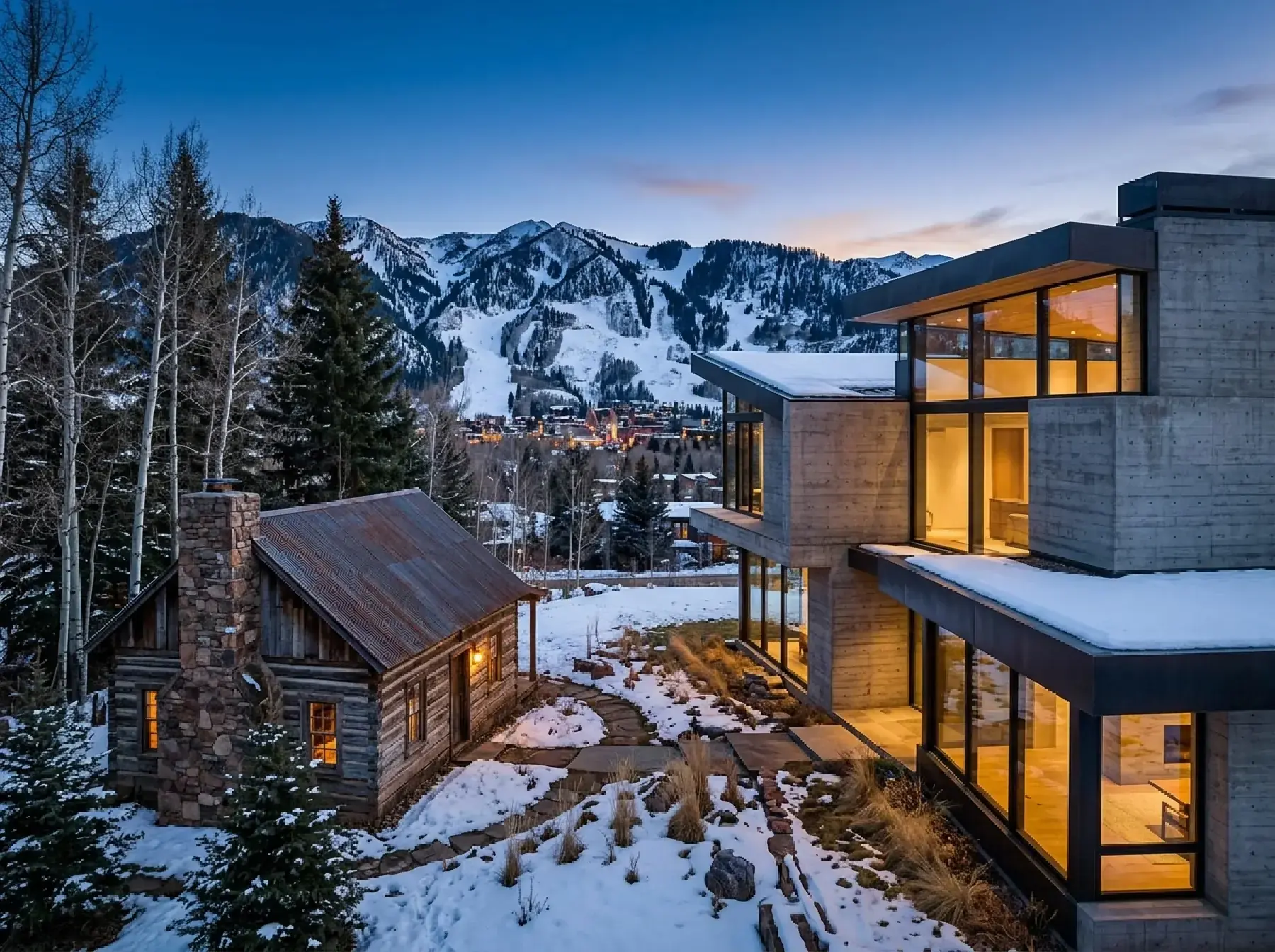
How deep ground-source closed loops, triple-pane acoustic glazing, and thermal mass engineering allow multi-acre Aspen estates to operate with zero winter utility strain.
Building and maintaining a multi-thousand-square-foot luxury compound at eight thousand feet of elevation in the Colorado Rockies presents environmental and thermal challenges that conventional residential construction cannot solve. In Aspen, Vail, and Telluride, winter temperatures routinely drop below zero degrees Fahrenheit, snow loads can exceed one hundred pounds per square foot, and dry alpine air accelerates heat loss across building envelopes. Historically, heating an expansive mountain estate required enormous natural gas boilers running constantly, consuming tens of thousands of dollars each winter while leaving cold drafts near large glass windows.
Over the past five years, forward-thinking alpine architects and private clients have completely rewritten the rules of high-altitude residential construction. The goal is no longer simply building a beautiful timber lodge, but creating an organic, high-performance sanctuary that harnesses ground thermal energy, captures passive solar warmth, and maintains flawless interior comfort during the most severe winter blizzards. Geothermal heat exchange and passive house envelope design have evolved from experimental sustainability concepts into essential pillars of modern alpine estate engineering.
At the core of an advanced alpine energy system lies the vertical closed-loop ground-source geothermal field. Beneath the surface of the Rocky Mountains, the earth maintains a remarkably stable temperature between 45 and 52 degrees Fahrenheit year-round, regardless of ambient winter blizzards above. By drilling vertical boreholes three to five hundred feet into native granite and installing high-density polyethylene U-tubes circulating a non-toxic water-glycol solution, the system extracts reliable thermal energy directly from the earth.
During freezing winter months, high-efficiency geothermal heat pumps compress this absorbed ground heat, multiplying its temperature and circulating it through hydronic in-slab radiant tubing embedded throughout every concrete floor of the residence. Radiant floor heating eliminates forced-air ducts that circulate dry dust and create uneven temperature zones. Floors stay warm under bare feet, radiant heat warms room occupants directly without drafts, and heating costs drop by sixty to seventy percent compared to traditional propane or natural gas heating systems.
Geothermal radiant systems are equally vital for outdoor living and accessibility in high-altitude environments. Hand-shoveling or plowing long, winding mountain driveways and motor courts can damage custom stone surfaces and create dangerous ice hazards. High-altitude compounds integrate exterior hydronic snow-melt coils beneath driveways, motor courts, and outdoor entertaining terraces. Fueled by geothermal base loads with secondary boiler assist, the system automatically detects snowfall, warming paved surfaces just enough to melt snow on contact and evaporate moisture, guaranteeing clear vehicle access throughout the winter.
Thermal mass engineering represents the second critical component of high-altitude passive solar design. Monolithic walls poured from board-formed concrete, dry-stacked native Colorado fieldstone, and polished terrazzo floor slabs possess tremendous thermal storage capacity. When positioned strategically along south-facing facades, these dense materials absorb solar heat throughout sunny high-altitude winter days. As evening temperatures plunge, the stored warmth radiates slowly into the living quarters, stabilizing interior temperatures naturally throughout the cold mountain night.
Expansive floor-to-ceiling glass walls are essential for framing panoramic vistas of Aspen Mountain, Mount Sopris, and the Roaring Fork Valley, but unchecked glazing can become a massive source of thermal loss. Modern alpine architecture relies on Swiss-engineered triple-pane glass assemblies featuring warm-edge composite spacers, argon or krypton gas fills, and low-emissivity metal oxide coatings. These assemblies deliver insulation values approaching solid walls, preventing condensation, eliminating draft currents, and providing complete acoustic silence during heavy mountain gales.
Solar orientation must be calculated with astronomical precision during site planning and foundation placement. In the Northern Hemisphere winter, the sun travels low along the southern horizon, providing intense radiant energy through clear high-altitude skies. Cantilevered roof overhangs and automated exterior louvers are calibrated mathematically: they allow low-angled winter sun to penetrate deep into interior living spaces while completely shading vertical glass during high-angled summer months, preventing unwanted solar heat gain and eliminating the need for aggressive cooling.
Fresh air ventilation in a hermetically sealed, super-insulated mountain home requires continuous mechanical assistance to maintain indoor air quality and healthy humidity levels. High-altitude residences employ Energy Recovery Ventilation and Heat Recovery Ventilation systems that continuously extract stale interior air while drawing in fresh mountain oxygen. As outgoing air passes incoming air through a specialized heat-exchange core, up to eighty-five percent of the heat energy is transferred to the fresh incoming stream, pre-warming it before it enters living spaces.
Integrated humidification systems are equally critical for occupant comfort and fine architectural preservation in high-altitude environments. Outdoor relative humidity in Aspen during winter often hovers below fifteen percent, which causes dry skin, respiratory discomfort, and severe damage to custom architectural woodwork, fine art, and acoustic musical instruments. Modern alpine HVAC designs incorporate commercial steam humidifiers that maintain indoor relative humidity between 35 and 40 percent year-round, protecting antique furnishings and timber joinery from drying or cracking.
Energy resilience through hybrid micro-grid storage provides the ultimate peace of mind for private mountain compounds located at the end of remote mountain roads. Severe winter storms, high winds, and avalanche activity can occasionally knock down regional power lines, leaving properties without grid electricity for hours or days. Hybrid systems pair roof-integrated solar photovoltaic arrays with commercial lithium iron phosphate battery storage and silent clean-fuel backup generators. If the public grid drops offline, the home transfers seamlessly to island mode without so much as a light flicker.
At Praedia, our Alpine Desk evaluates mountain estates with deep technical rigor. A magnificent mountain view is only as valuable as the engineering that protects your family from winter extremes. We inspect geothermal borehole records, verify glazing U-values, audit snow-melt manifolds, and review mechanical plant rooms to ensure every alpine compound we represent offers true independence, effortless comfort, and lasting structural integrity through every mountain season.